


 Loading...
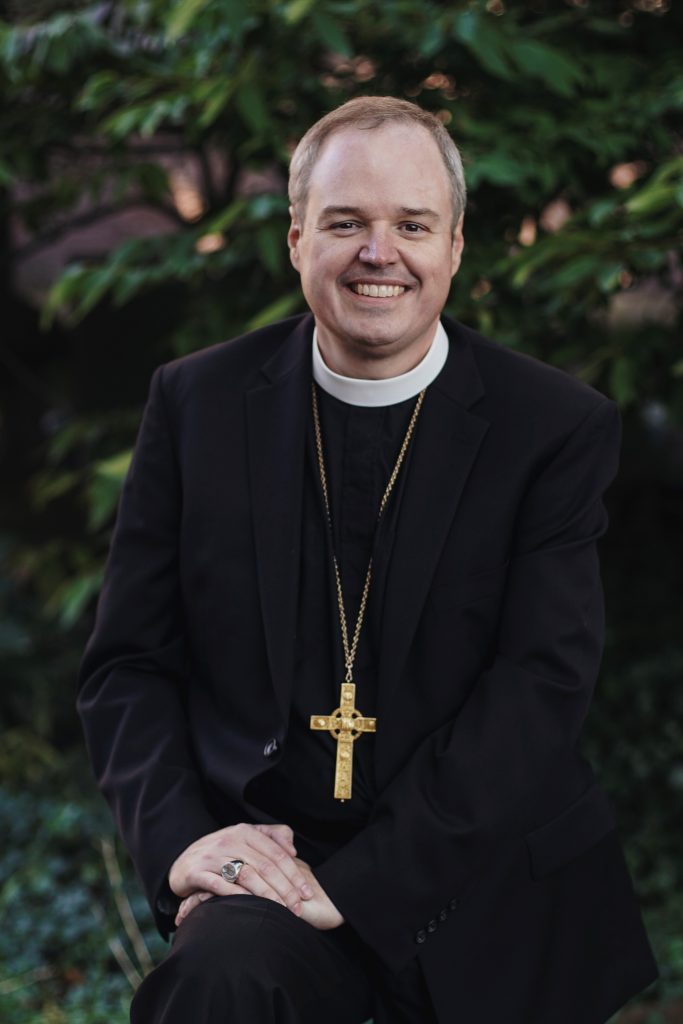
 "I apologize in the Holy now of God's presence ... for the sin of slavery," Gulick told the crowd of about 75 who had assembled at the cathedral for the last leg of their pilgrimage, a candlelight procession across the Clark Memorial Bridge to New Albany to commemorate the journey of runaway slaves to the free states north of the Ohio River.
Noting with irony that Christ Church Cathedral, built in 1824, benefited from slavery's "ill-gotten gains," Gulick called slavery a travesty and said he was honored to act in solidarity with the Presiding Bishop Katharine Jefferts Schori, who issued an apology for slavery from the pulpit of St. Thomas African Episcopal Church in Philadelphia on Oct. 4.
Organized by Interfaith Paths to Peace in conjunction with the Diocese of Kentucky's Division of Peace and Justice, the 28-mile pilgrimage introduced the pilgrims to the history of the Underground Railroad in Louisville and Southern Indiana as they walked in the footsteps of runaway slaves to the precise spot on the banks of the Ohio River in western Louisville where runaway slaves, guided by a view of New Albany's Old Clock Tower, crossed to freedom and hope.
"But their journey to freedom didn't end there," local historian Pam Peters told the pilgrims before they marched by candlelight across the Clark Memorial Bridge on the pilgrimage's final night. "The slaves had more barriers to cross on the way to freedom." Peters is the author of "The Underground Railroad in Floyd County, Indiana," a chronicle of the informal system of safe houses and secret routes that assisted fleeing slaves.
The pilgrims, however, were not just immersed in the past throughout their sojourn.
Mary Abrams, chair of the diocese's Peace and Justice Division, said that the organizers started with the Underground Railroad, but "as we progressed, we began to see its universal application to all forms of human bondage and emancipation."
"Pilgrimages serve two purposes," Abrams explained. "The first is to awaken and nurture the inward journey of the pilgrim through prayer, reflection and interaction with other pilgrims, and the second, and perhaps the more important, is to aid the journey of those who see and are inspired by the pilgrim's progress."
Consequently, in addition to having the pilgrims visit the major stations in the Underground Railroad, they also explored contemporary barriers to freedom along the way. "Many things prevent people from being full participants in society, including hunger, homelessness, limited access to medical care, war and even a dysfunctional economy," said peace activist Terry Taylor, executive director of Interfaith Paths to Peace. "The pilgrims looked at each barrier on their three-day journey."
One of the places they visited, therefore, was St. George's Community Center, where they met with its executive director Arthur Cox. Speaking about the barrier of illiteracy, Cox informed the group about St. George's Freedom School and explained how it shows young people "the way over and around modern obstacles" to freedom, such as illiteracy, racism, bigotry and violence. The pilgrims also visited Farmington, Center for Women and Families, and Kentucky Refugee Ministries.
In addition to St. Andrew's and the cathedral, several other area Episcopal Churches joined the 50-plus sponsors of the event: St. Paul's in New Albany, St. James in Pewee Valley, and St. George's and the Church of the Resurrection in Louisville.
Before taking that final pilgrimage walk from Kentucky to Indiana, the pilgrims were inspired by two performers: Judith Owens-Lalude, an African American performance artist who appeared in character as a runaway slave, and internationally renowned folk musician and storyteller Kim Harris, who used songs and Bible stories of slavery and freedom to prepare them for the rest of their journey.