



 Loading...
During their first day at General Convention yesterday (July 7), those attending the 76th triennial gathering of Episcopalians (including a first-time online community of visitors) were challenged by their leaders to confront the crises facing the church, but they also they also heard hope-filled stories from a panel of diocesan leaders, including Bishop Ted Gulick, about the renewal underway in four crisis-stricken dioceses.
[Visit the Episcopal Church's Media Hub to get connected to the latest news coming out of convention--some of it through live webcasts]
During yesterday's mid-afternoon joint session of The Episcopal Church’s two legislative bodies, the Most Rev. Katharine Jefferts Schori, presiding bishop and primate of The Episcopal Church, and Dr. Bonnie Anderson, president of the House of Deputies, urged the church’s leaders to keep their focus on the church’s work in doing God’s mission as they grapple with issues over the 10-day convention.
A crisis, said Presiding Bishop Katharine Jefferts Schori, offers a "remarkable opportunity" for getting to the essentials, but it is also a time for decision-making and responding. Now is that time for the Episcopal Church, she suggested, as its leaders address issues of inclusivity and poverty, the financial crisis and what she described as the “great Western heresy,” the belief “that we can be saved as individuals, that any of us alone can be in right relationship with God.”
To counter this heresy, she offered a view of being in relationship with God that is encapsulated by the theme of the conference – ‘ubuntu,’ an African term that means, “I am because we are,” which she said recognizes that we can only be whole in relationship with others. “If we want to be faithful, living in ubuntu, we need to be continually rediscovering that my needs are not the only significant ones,” she said.
The Episcopal Church, she said, “is at a decision point, one which may involve suffering but it is our opportunity to choose which direction we go and what we will build. We will fail if we choose business as usual. There will be a cross-shaped difficulty, but if we work faithfully there will be resurrection as well…. we can make our decision in hope. We can speak out of love of God to the world and we can do it together.”
[For the full story, click here . To hear a recording of the full session, visit the Media Hub. For the text of her speech, click here.]
House of Deputies Presiding Bonnie Anderson urged the deputies and bishops to be committed to mission and serving the poor as they deal with the crises confronting us. "Our technology enables us to see and to know not only how we are affected," she said, "but how the global economic crisis disproportionately affects the poorest people in the world. It is within our reach to do something about that, and that is the toughest thing about our tough times."
Praising the churches and dioceses that have pledged to support the Millennium Development Goals – a United Nations’ initiative to reduce global poverty by 2015, she said that Episcopalians must go outside the walls of their churches and “no longer be afraid to ask other people to join us in action.” Click here to read her address.
Their opening presentations were appreciated by one visitor from our diocese, Jim Wade, who is at the convention assisting our deputation and was contacted last night by phone. “I thought the Presiding Bishop and Bonnie Anderson were saying it like it is – we’re not just going to mope around. They gave a call to action,” said Wade, a member of Grace Church in Paducah and husband of its rector, the Rev. Libby Wade, who is chair of the deputation. “People are still hurting, still needing the church, and it is up to us to help. The need is a lot worse now than it has been before.”
Although the leaders’ opening remarks focused on the crises facing the church, Wade said the convention atmosphere is not one of crisis or contentiousness. “People seem to be happy … I see a spirit of Christ fellowship, much like in Columbus (the location of the previous convention in 2006). The spirit is good,” he said.
The spirit of hopefulness and moving forward also seemed to characterize the panel discussion held later yesterday afternoon, which offered stories about the experiences of those involved in reconstituting and renewing dioceses whose previous leadership had split from The Episcopal Church.
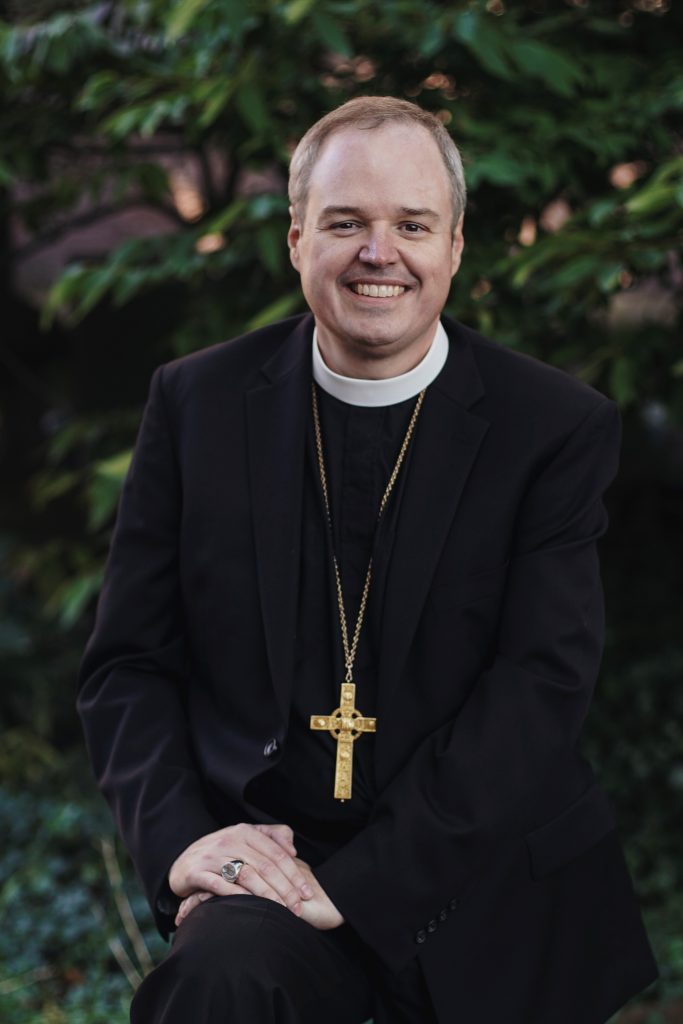
In his role as provisional bishop of the Diocese of Fort Worth, Bishop Gulick was among the panelists, who included bishops and deputies from the Dioceses of Pittsburgh, Quincy, San Joaquin and Fort Worth. (Gulick, bishop of the Diocese of Kentucky, is serving each diocese half-time through November.)
The panelists expressed an over-arching sense of optimism and repeatedly noted the joy they have felt in rebuilding their dioceses. “The absolute joy that people are experiencing… We are free now to do the kind of mission and ministry that was there but we were not given an opportunity to do,” said Fort Worth deputy Katie Sherrod, who is also the diocese’s communication director. “This is a journey that started in a lot of heartbreak but is moving toward joy.”
Gulick humorously drew attention to one of the serious challenges renewing dioceses are facing when he made a plea for job applicants: “The loyal priests in Fort Worth are mostly over 65. Since some of you may be watching out there in Episcoland: We need clergy in Fort Worth. We’re looking for mission-hearted clergy.”
The panelists also expressed great thankfulness for the support shown them by Episcopalians and The Episcopal Church, but Sherrod also made a point that “we come to this convention bearing gifts too. We all know about exclusion…. All are welcome in our diocese now, and that’s taken a little getting use to. I think we’re modeling something for this convention.” She added, however: “We’ve certainly gotten gifts from the church at large…. I can’t say too many good things about our provisional bishop. Bishop Gulick is loving us into health.”